
Mekong Delta Center
The World Bank-funded Mekong Delta Integrated Climate Resilience and Sustainable Livelihoods (MD-ICRSL) project in 2020–2024 improved climate resilience in the Mekong Delta, among other things by establishing the region's environmental data center, the Mekong Delta Center.
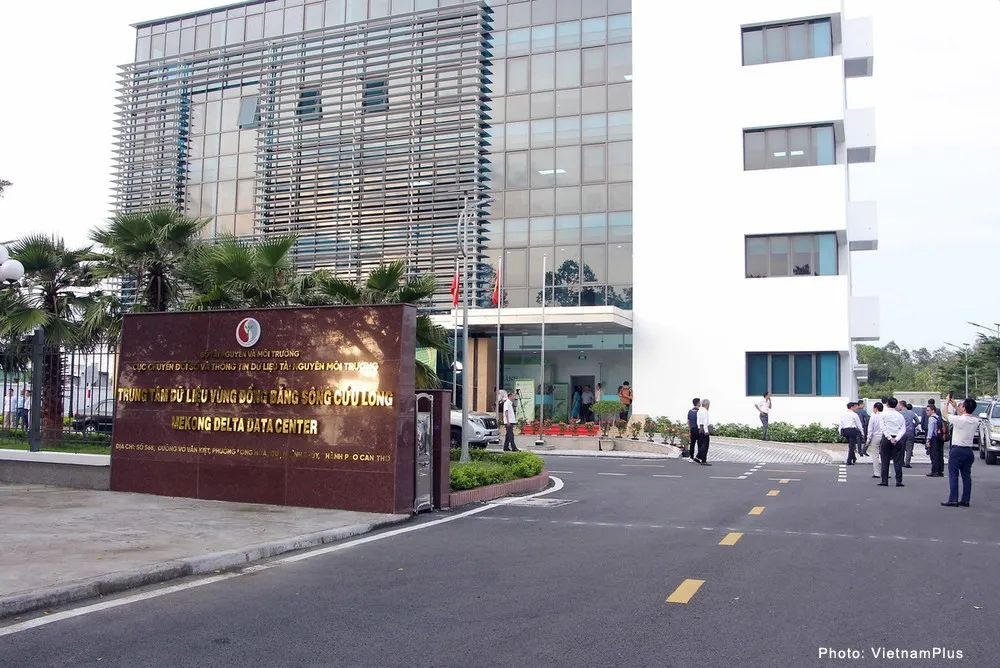
The development objective of the project was to improve the tools for climate-smart planning and to strengthen the climate resilience of land and water resource management practices in the Mekong Delta of Vietnam, one of the river deltas most vulnerable to climate change in the world. The project was a key part of the World Bank’s long-term engagement to strengthen climate-resilient, integrated management and development in the Mekong Delta across sectors and institutional levels.
The project developed information systems, promoted institutional arrangements and supported the development of provincial planning capacity for the sustainable development of the entire delta.
The Mekong Delta Center
A significant part of the project was the establishment of an environmental data center, the Mekong Delta Center. The task of the center is to manage environmental data for the entire delta and share it with those who need high-quality, up-to-date information for planning or decision-making.
Environmental data was collected from the 13 provinces of the region. Data that varied in structure, format and coordinate systems was harmonised and quality-checked before being stored in the center’s database. The data was published through interface services, dashboards and map services.
The project developed GIS and AI-based applications for analysis, reporting and forecasting to address the most typical environmental problems and natural disasters in the region.
The Mekong Delta Center operates under Vietnam’s Ministry of Agriculture and Environment. Kari Mikkonen worked as a World Bank consultant in the specification and implementation phases of the project.